This page contains affiliate links. If you purchase through them we may earn a small commission at no extra cost to you. Learn more
AC-Coupled vs DC-Coupled Battery: What's the Difference and Which Is Better?

When you start exploring battery storage for your solar system, one technical question comes up almost immediately: AC-coupled or DC-coupled? The choice affects efficiency, cost, installation complexity, and — crucially — whether you can use your existing inverter. This article explains both approaches clearly so you can make an informed decision.
How DC Coupling Works
In a DC-coupled system, the solar panels and the battery share the same DC electrical bus. A single hybrid inverter manages both — it converts solar DC to AC for your home, and simultaneously charges the battery directly from the DC bus without any intermediate conversion.
The flow looks like this:
Solar panels → DC bus (hybrid inverter) → Battery charged directly
DC bus → Inverter → AC power for your home
Because the battery charges from DC without first converting to AC and back again, almost no energy is wasted in the charging process. Round-trip efficiency for DC-coupled systems typically runs at 95–97%.
Popular hybrid inverters used in DC-coupled UK installations include the GivEnergy All-in-One, SolarEdge Home Hub, Sungrow SH series, and Huawei SUN2000.
How AC Coupling Works
In an AC-coupled system, the battery has its own dedicated battery inverter (sometimes called an AC battery or AC-coupled inverter). The solar panels connect to a conventional string inverter as usual — converting DC to AC. If the battery needs charging from solar, the AC power is converted back to DC for storage, then back to AC again when discharged.
The flow looks like this:
Solar panels → String inverter → AC power
AC power → Battery inverter → DC storage (charging step)
Battery → Battery inverter → AC power for your home (discharge step)
That extra AC→DC→AC conversion costs you energy. In practice, AC-coupled systems lose around 3–5% more of your solar generation compared with DC-coupled systems.
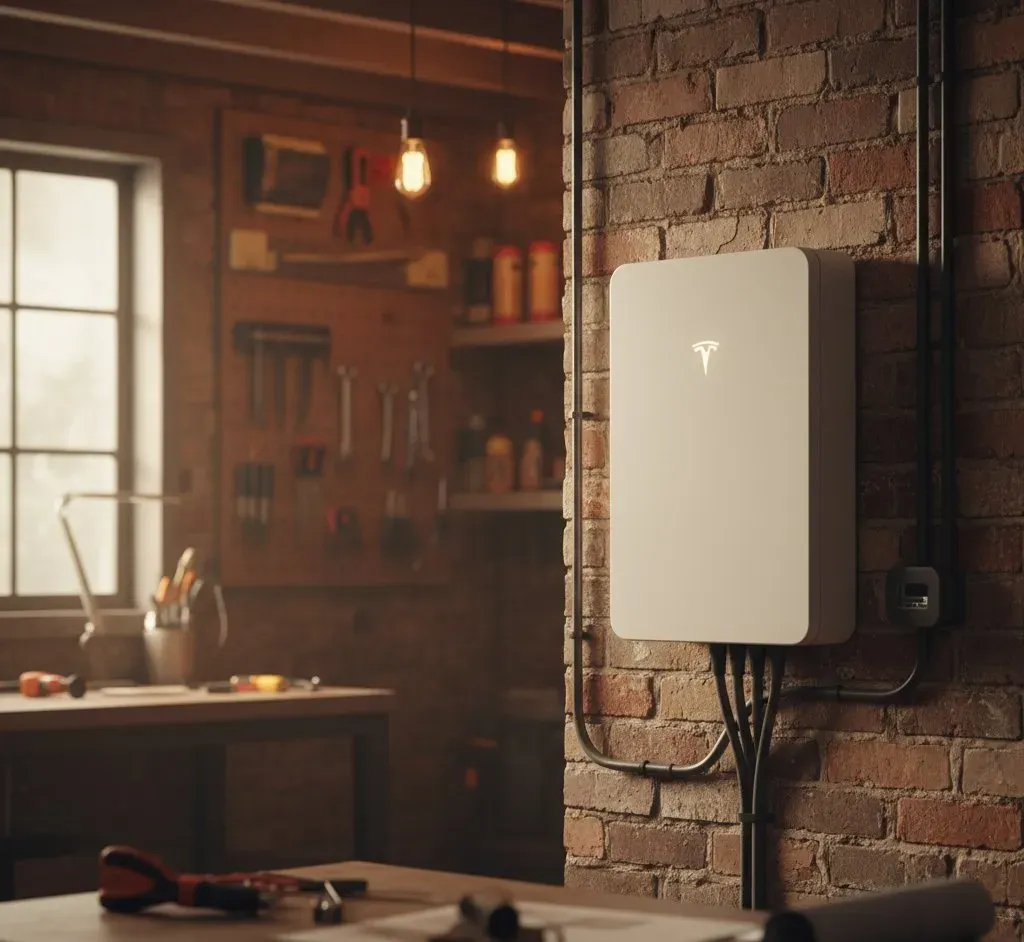
Common AC-coupled batteries in the UK include the Tesla Powerwall (all versions), GivEnergy AC battery, SolarEdge Energy Bank, and Fronius Ohmpilot-compatible units.
Efficiency Comparison
For a household that cycles a 10 kWh battery once a day, the efficiency difference might cost you 100–150 kWh per year — worth roughly £24–£36 at current rates. Not enormous, but it adds up over 15 years.
Cost Comparison
The upfront cost advantage often falls to AC coupling when retrofitting, because you avoid replacing a working inverter. On a new install, DC coupling is usually more cost-effective overall.
When DC Coupling Makes More Sense
DC coupling is worth considering when:
- You are planning a new solar + battery installation from scratch
- You are already replacing a failed or end-of-life string inverter
- You want maximum efficiency from your system over the long term
- You are using a single-phase or three-phase hybrid inverter that integrates cleanly with your panels
On a new 4 kW system with a 10 kWh battery, a DC-coupled setup will typically outperform an AC-coupled equivalent by around £30–50/year in recovered solar energy.
When AC Coupling Makes More Sense
AC coupling is worth considering when:
- You already have solar panels and a string inverter that is working well
- Your existing inverter is mid-life (5–10 years old) and not worth replacing
- You want to add battery storage without disrupting your existing setup
- Your string inverter is a proprietary brand that does not offer a compatible hybrid upgrade
The Tesla Powerwall is almost always installed as an AC-coupled device, making it a popular retrofit choice across all inverter brands.
Brand Examples by Coupling Type
Compatibility With Your Existing Inverter
If you have an existing solar installation, check your inverter brand before committing to either approach:
- SolarEdge with optimisers — upgrading to a SolarEdge Home Hub gives you DC coupling without replacing the optimisers
- Solis, Growatt, or Fronius string inverters — AC-coupled batteries are the usual route unless you are replacing the inverter
- GivEnergy string inverter — you can upgrade to a GivEnergy hybrid inverter relatively simply if the wiring allows
Who Should Choose Which?
DC coupling is worth exploring if you are starting from scratch, or your existing string inverter is more than 8–10 years old and approaching replacement age. The efficiency gains and cleaner single-unit installation are real advantages on a new build.
AC coupling is worth exploring if you already have a working solar system and want to add a battery without the disruption and cost of swapping your inverter. The 3–5% efficiency loss is a genuine trade-off, but it is often outweighed by the savings on inverter replacement.
Ask your installer to quote both
When getting quotes for battery storage, ask for a price on both AC-coupled and DC-coupled options. If DC coupling requires inverter replacement, the price difference may be smaller than you expect — or larger. Getting both figures lets you make a genuine comparison.
Check inverter compatibility before buying
Not all hybrid inverters work with all battery brands, and some AC-coupled batteries are only compatible with specific inverter families. Always confirm compatibility between your chosen inverter and battery before purchasing either component.
Summary
The core trade-off is straightforward: DC coupling offers better efficiency and is the cleaner solution on new installs, while AC coupling offers flexibility and lower disruption for retrofits. Neither is universally superior — it depends on whether you are starting fresh or adding to an existing system.
Share this article
Stay informed
Get free solar updates direct to your inbox
Related reading
Solar Battery Storage: Complete UK Guide 2026
Adding battery storage to a UK solar installation — types, sizing, costs, and which products are worth considering in 2026.
Adding a Battery to Existing Solar: What's Involved
How to add battery storage to an existing solar panel system. Compatibility, costs, installation options, and what to ask your installer before committing.

Solar Inverters Explained: Types, Sizing, and Real-World Limits
String, micro, and hybrid inverters explained — plus the critical G98/G99 threshold at 3.68kW and what it means for what you can run simultaneously.


Switch to Octopus Energy
Get 50 credit when you switch. We get 50 too — win-win.
What does this mean for YOUR home?
Design your perfect solar setup in under 3 minutes. Free, no sign-up required.
Build Your Solar System