This page contains affiliate links. If you purchase through them we may earn a small commission at no extra cost to you. Learn more
East-West vs South-Facing Solar Panels: Which Layout Produces More?
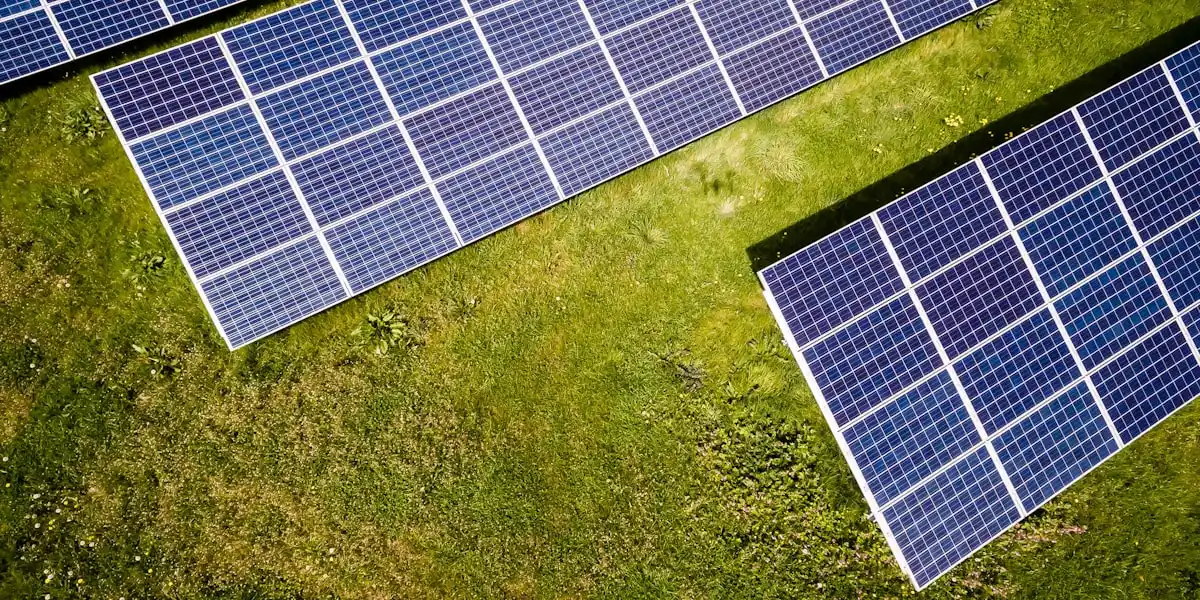
Ask most people which way solar panels should face, and they will say south. It is the correct answer — but only if the goal is maximising total annual output. Once you factor in when you actually use electricity, whether you have a battery, and the shape of your roof, east-west installations often make more practical sense than the south-only rule suggests.
The Basic Yield Difference
Total annual generation is the most commonly cited figure, and on this measure south wins clearly.
A south-facing system at optimal tilt captures the sun's energy more efficiently across the full day, particularly at solar noon when irradiance is highest. East and west faces each miss roughly half the sun's daily arc.
But raw kWh output is not the complete picture.
The Generation Curve: Where East-West Changes the Equation
The shape of the generation curve matters as much as the total. Here is how each layout behaves:
South-facing generation curve:
Output starts around 7–8am, ramps steeply to a peak between 11am and 2pm, then falls steeply back to zero by 6–7pm. The curve is a sharp, narrow hump centred on midday. In winter, the peak is lower and shorter.
East-west generation curve:
The east array starts producing at sunrise — earlier than a south array in morning — reaching a moderate peak around 9–10am. Generation dips slightly through the middle of the day (when neither face catches the sun optimally), then the west array picks up, reaching a second moderate peak around 3–4pm before trailing off at sunset. The curve is wider and flatter.
In practical terms:
Self-Consumption Without a Battery
Self-consumption is the percentage of your solar generation you actually use in your home rather than exporting. It is the primary driver of your savings — self-consumed solar replaces electricity you would otherwise buy at ~24p/kWh, while exported electricity earns only 3–15p/kWh under SEG.
For a typical working household (people out during the day, active in mornings and evenings):
The east-west layout aligns better with how most households actually consume electricity. Even though it generates fewer kWh overall, more of those kWh are used directly, making the effective financial benefit closer than the raw yield comparison suggests.
Calculate in £, not just kWh
10 kWh self-consumed at 24p saves you £2.40. 10 kWh exported at 5p earns you £0.50. The financial difference is nearly 5:1 in favour of self-consumption. This is why a higher self-consumption rate can offset lower total yield.
With a Battery: South-Facing Pulls Ahead
Add a battery to the equation and the calculus shifts back toward south-facing.
With a battery, self-consumption is less of an issue — you can store midday south-facing output for use in the evening. The battery fills more quickly with a south-facing array because peak output is higher. An east-west system's flatter curve may not produce enough sustained output to fill the battery fully on shorter winter days.
If your plan includes a battery, south-facing is the stronger layout.
Roof Space and Physical Considerations
East-west installations can use both sides of a pitched roof simultaneously. For some households, this resolves a real constraint.
For a house that runs roughly east-west (i.e., one slope faces east, one faces west) with no significant south-facing roof, an east-west installation is not a compromise — it is simply the right answer for that roof.
Shading affects east-west arrays differently
In an east-west installation, morning shading affects only the east array, not the west. This can actually be an advantage if you have trees or a neighbouring property that casts a shadow in the morning but not the afternoon. Ask your installer to model shading at different times of day across both arrays.
Flat Roof Considerations
On a flat roof, you have freedom to mount panels at any angle and orientation. East-west is increasingly popular on flat commercial and domestic roofs because:
- Panels can be mounted at a low tilt (10–15°), reducing wind loading
- East-west orientation allows panels to be packed more tightly without shading each other
- More panels fit in the same footprint than a south-only layout at steeper tilt
A 4 kW south-only flat roof array at 30° tilt requires more row spacing to avoid self-shading. The same roof fitted with an east-west layout at 10° can often accommodate 5–6 kW, producing more total energy despite the orientation penalty.
Cost Difference
The cost difference is small. The main consideration is ensuring your inverter has two independent MPPT (Maximum Power Point Tracking) inputs — one for each orientation. Most hybrid and many modern string inverters support this.
Who Should Choose Which?
South-facing is worth prioritising if your roof has a good south aspect, you are adding a battery, or you want to maximise total annual kWh for export income under SEG. It is the highest-output option when the roof allows it.
East-west is worth exploring if your primary roof aspect is east or west rather than south, your roof runs roughly east-west and splits naturally across both pitches, you do not have a battery and want to maximise self-consumption across morning and evening hours, or you are on a flat roof and want to fit more capacity in less space.
For most people without a clear south-facing roof, east-west is not a fallback — it is the right layout. A well-executed east-west system on the correct roof type will outperform a south-facing system on an awkward south aspect in both yield and self-consumption.
Summary
South-facing panels generate more total electricity — roughly 15–20% more per year. But east-west layouts spread that generation across more hours, align better with how households actually use power, and work well on roofs that do not have a strong south face. If you have a battery, south-facing makes the most of it. If you do not, east-west self-consumption can close much of the financial gap. The right answer depends on your roof, your usage pattern, and whether you have storage.
Share this article
Stay informed
Get free solar updates direct to your inbox
Related reading
How to Size a Solar Panel System for Your Home
How to size a solar panel system for your UK home. Factor in electricity usage, roof space, budget, and future plans like EVs and heat pumps.
How Much Do Solar Panels Cost in the UK in 2026?
UK solar panel costs 2026: realistic prices by system size, what is included, and what to push back on in your quote.


Switch to Octopus Energy
Get 50 credit when you switch. We get 50 too — win-win.
What does this mean for YOUR home?
Design your perfect solar setup in under 3 minutes. Free, no sign-up required.
Build Your Solar System