This page contains affiliate links. If you purchase through them we may earn a small commission at no extra cost to you. Learn more
Salary Sacrifice for Solar Panels: What UK Employees Need to Know

Salary sacrifice for solar panels is an idea gaining real traction in UK energy policy — but it is not yet a standard option you can sign up for today. Understanding what genuinely exists, what is being proposed, and what the barriers are will help you decide whether it's worth keeping an eye on.
What Salary Sacrifice for Solar Would Actually Mean
Salary sacrifice is an arrangement between you and your employer. You agree to receive a lower gross salary in exchange for a non-cash benefit — and because that reduction comes off your pre-tax pay, you save income tax and National Insurance on the sacrificed amount. Your employer also saves employer National Insurance on the reduced salary.
The EV salary sacrifice market is the mature example most people are familiar with. Under current HMRC rules, electric vehicles attract a Benefit-in-Kind (BIK) rate of just 2%, meaning the effective tax cost of receiving a car through salary sacrifice is minimal. That combination of pre-tax salary reduction and near-zero BIK liability makes EV salary sacrifice genuinely compelling.
For solar, the idea works similarly in principle:
- Your employer arranges a solar installation at your home through a scheme provider
- Your gross salary is reduced by the monthly repayment over the agreement term (typically 3–5 years)
- That reduction falls outside income tax and National Insurance
- At the end of the term, you take ownership of the system
The catch is that "in principle" is doing a lot of work here. The regulatory framework that makes EV salary sacrifice viable does not automatically extend to solar panels.
What Exists Now: The Covase/Perx Pilot
One provider has launched a genuine product in this space. Covase, operating under the brand Perx, offers a bundled home energy package via employer salary sacrifice that combines an EV, an EV charger, solar panels, and a home battery into a single monthly arrangement.
This is a real product — not vaporware — but it sits firmly at the pilot and early-adopter stage. To access it, your employer needs to have signed up to the scheme and be willing to run the administrative setup. Most employers have not done this. Covase is actively working to grow employer adoption, but as of April 2026, this is not something you can access independently.
This Is Not a Standard Product
Salary sacrifice for solar is not available through a simple application process. You cannot sign up to a scheme yourself — your employer must participate. If you approach your HR or benefits team and they are not aware of any such scheme, that is not unusual. The market is at a very early stage.
The Political Momentum: 92 MPs and a Clear Signal
In early 2026, 92 Labour MPs signed a letter calling on the Government to formally extend salary sacrifice to home energy improvements including solar panels. This is a meaningful political signal — the same parliamentary pressure that helped cement EV salary sacrifice as a mass-market product is now being applied to solar.
The argument those MPs are making is logical: the mechanism already exists, employers already understand it, and a low BIK rate on solar installations (as exists for EVs) would make the savings substantial enough to drive real uptake.
Whether the Government acts — and how quickly — remains to be seen. No response had been issued as of April 2026. But the political direction of travel is towards expanding the scheme, not away from it.
How the Tax Treatment Works (or Would Work)
If HMRC were to issue guidance enabling solar salary sacrifice with a favourable BIK treatment, the savings for employees could be material. Here is how the maths works in practice, using illustrative figures only — your actual outcome depends on your tax bracket, salary, and the specific scheme terms.
Illustrative example: A 4 kWp system at £7,000 (in line with typical 2026 pricing — see solar panel costs).
Spread over a four-year salary sacrifice arrangement, the gross monthly reduction would be approximately £146. After income tax and National Insurance savings:
- Basic-rate taxpayer (20% tax + 8% NI): net monthly cost approximately £105 — total net cost around £5,040, saving roughly £1,960 versus cash
- Higher-rate taxpayer (40% tax + 2% NI): net monthly cost approximately £76 — total net cost around £3,650, saving roughly £3,350 versus cash
These figures are illustrative and simplified. They do not account for BIK liability (which could reduce or eliminate the savings depending on how HMRC treats solar), interest costs within the scheme, or your individual tax position. Always work through the numbers with a financial adviser who knows your circumstances.
Salary Sacrifice vs EV Salary Sacrifice: Established vs Emerging
The EV salary sacrifice comparison is the most useful reference point for understanding what solar sacrifice could look like — and why it is harder to deliver.
The EV market had years of development and HMRC engagement before reaching its current scale. Solar salary sacrifice is at the beginning of that journey, not the end.
The BIK Rate Is the Key Variable
EV salary sacrifice works so well because the 2% BIK rate means almost none of the tax advantage is clawed back as a taxable benefit. If solar panels were treated as a benefit in kind at a higher rate — say 10% or 20% of system value per year — the savings would shrink significantly. Until HMRC specifies the BIK treatment for solar, the figures above should be treated as theoretical best-case illustrations.
Barriers to Mainstream Adoption
No HMRC guidance exists. Solar panels are a home improvement fixed to a property, not a vehicle. HMRC would need to issue explicit guidance — or the Government would need to lay a statutory instrument — before employers have the legal clarity to run these schemes.
BIK treatment is unresolved. The efficiency of EV salary sacrifice rests almost entirely on the 2% BIK rate. Without an equivalently low BIK treatment for solar, the scheme loses much of its appeal. Employers face uncertainty about their own liability if they act without clear rules.
The system stays with the property, not the person. When you leave a job mid-EV-scheme, the car goes with you and the salary sacrifice unwinds cleanly. If you leave a job mid-solar-scheme — or if you move house — the panels are fixed to the building. Schemes need clear answers to what happens in those scenarios, which adds complexity that the EV market does not face.
Employer participation is required. Unlike buying solar outright or through personal finance, salary sacrifice only works if your employer opts in. Most employers will not implement a new benefit scheme without clear HMRC rules and proven provider infrastructure.
What to Do Now If You Are Interested
Given the current state of play, the practical options are limited but worth knowing.
Check with your employer. If you work for a larger organisation with an active employee benefits programme, it is worth asking your HR or benefits team whether they have heard of Covase or Perx. Some forward-thinking employers may already be exploring it. Raising the question can itself plant a seed.
Monitor Government announcements. Given the 92-MP letter and broader momentum around home energy, a policy announcement in 2026 is a realistic possibility. Following HMRC's published guidance updates or energy policy newsletters will give you early notice.
Explore what is available today. If you need solar now and cannot wait for a salary sacrifice scheme to materialise, the existing routes are worth understanding:
- Zero-rate VAT applies to every UK homeowner — automatically saving 20% versus pre-2022 prices. On a £7,000 system, that is £1,400
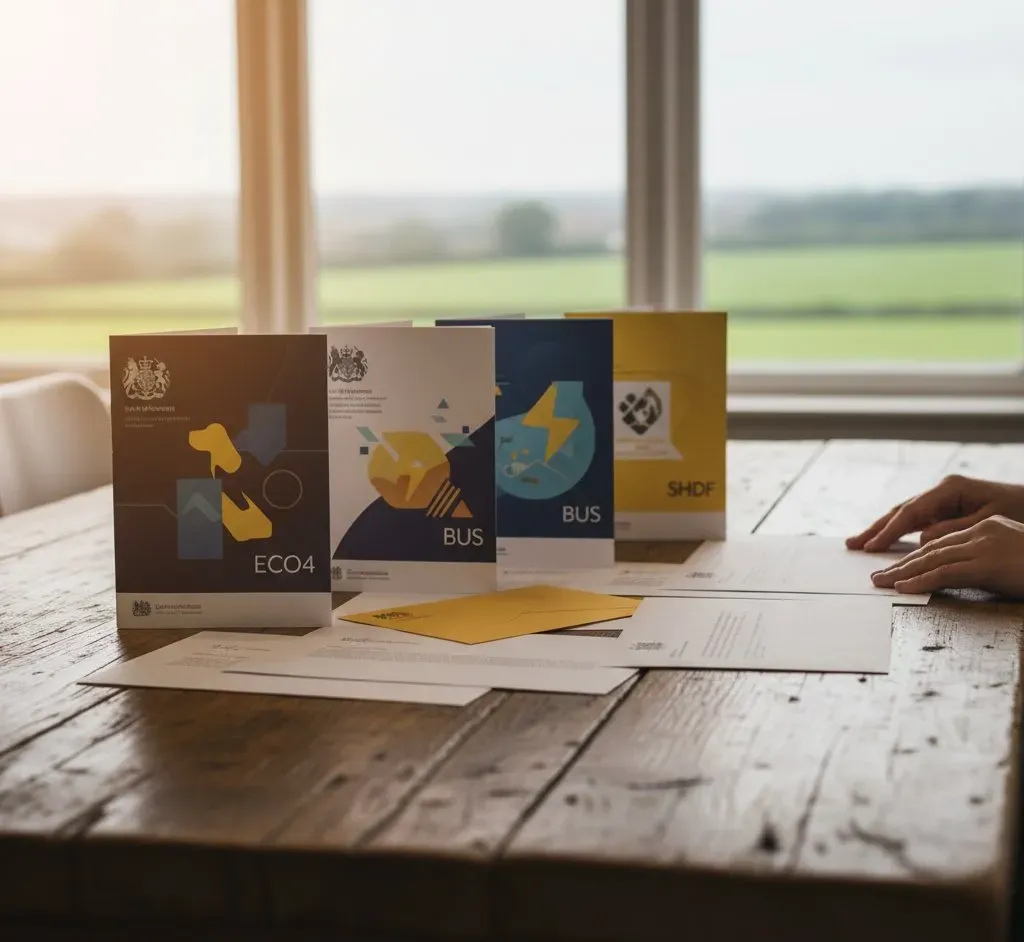
- ECO4 can fund free solar for eligible lower-income households (until December 2026)
- Scotland's Home Energy Scotland offers interest-free loans of up to £6,000 for solar
- Solar panel finance spreads the cost over several years without requiring employer involvement
See the grants guide and finance options for details on each route.
Zero-Rate VAT Is Available to Everyone Right Now
While salary sacrifice remains unavailable to most people, zero-rate VAT on solar panels applies to every UK homeowner today. Any reputable installer will reflect this in their quote automatically — but it is worth confirming. See the VAT explainer for details.
Get quotes so you know your baseline. Even if you are keeping an eye on salary sacrifice developments, knowing the current installed cost of a system gives you a benchmark for evaluating any future scheme.
The Bottom Line
Salary sacrifice for solar is a credible idea with political backing and at least one real pilot product in the market. It could genuinely reduce the effective cost of going solar for employed UK homeowners — particularly higher-rate taxpayers, for whom the savings would be most significant. But it is not a mainstream option today, and the regulatory framework needed to make it work at scale has not been put in place.
Treat this as a topic to watch rather than a route you can act on immediately. If your employer is proactive about employee benefits, raising the question costs you nothing. But do not put your solar plans on hold waiting for something that may or may not materialise in the next twelve months.
This article covers a fast-moving policy area. Review date: October 2026. Last updated: April 2026.
Share this article

Sell your property fast — solar panels can increase your home's value and make it more attractive to buyers
Affiliate link — we may earn a small commission at no extra cost to you
Stay informed
Get free solar updates direct to your inbox
Related reading

How Much Do Solar Panels Cost in the UK in 2026?
UK solar panel costs 2026: realistic prices by system size, what is included, and what to push back on in your quote.
Solar Panel Grants and Funding UK 2026
A plain-English guide to every solar grant, scheme, and funding route available in the UK in 2026 — including ECO4, GBIS, HUG2, BUS, and devolved schemes.


Switch to Octopus Energy
Get 50 credit when you switch. We get 50 too — win-win.

Prefer 100% renewable, community-owned?
Your Co-op Energy runs on 100% renewable electricity — profits reinvested in community energy projects.
What does this mean for YOUR home?
Design your perfect solar setup in under 3 minutes. Free, no sign-up required.
Build Your Solar System